


Game info
Endless runner, Arcade
Learn original Jetpack Joyride gameplay, one-touch controls, zappers, missiles, coin routes, missions, vehicles and Barry Steakfries’ laboratory escape.
Jetpack Joyride: Learn the Rhythm of Rise and Fall
Jetpack Joyride sends Barry Steakfries through a dangerous laboratory with a bullet-powered jetpack and a simple movement rule: apply thrust to rise and release it to descend. Zappers, lasers and incoming missiles turn that rule into a repeated timing challenge. A good run is a rhythm of small adjustments, not a constant climb toward the ceiling.
Halfbrick’s official Jetpack Joyride information introduces Barry’s laboratory escape, its vehicles and its recognisable equipment. The original game combines distance running with coins, missions and upgrades, giving each attempt several possible goals. Begin with the rise-and-fall timing, then add coin patterns and mission tasks without losing sight of the next safe gap. The sections below explain those original mechanics and practical ways to control the route through the lab.
Gameplay Overview
The laboratory scrolls toward Barry, so every height change needs to account for what is arriving next. A gap that looks comfortable now may become a poor position when a second obstacle enters the screen. Read the next safe opening and use only enough thrust to reach it.

The important movement is often the release. Holding thrust longer than needed can carry Barry into the top of an obstacle even after the route underneath it has opened. Similarly, releasing too early can put him on a falling line that meets the next hazard. Treat each adjustment as a small curve with a start, a useful height and an exit. That makes the controls easier to understand than alternating long holds with last-second corrections.
How to Play and Controls
Jetpack Joyride uses a one-touch flight rhythm: hold to apply thrust and release to fall. On the original touch interface, press the screen to make Barry rise. Begin with a brief hold, release and watch how the descent develops. Repeat that movement before trying to follow a complicated coin pattern.
In a clear opening, practise rising into the middle of the screen and easing down again. Then use the same rhythm to pass one obstacle while already looking for the next gap. Keep the input deliberate: a short hold, a controlled release and a fresh decision. Position your hand so it does not hide the incoming side of the lab. The control is simple, but the direction and length of the next flight arc still need to fit the hazards ahead.
Pro Tips: Look for the Next Safe Gap
Look toward the right-hand side of the play area, where the next hazard becomes visible. Barry’s current position matters, but staring only at him shortens the time available to choose the next height. Move your attention between the next gap and the space beyond it.
Useful Jetpack Joyride tips include:
- Use shorter thrust adjustments when a gap is already close.
- Read a fixed zapper’s shape before entering its section.
- Treat a missile warning as a reason to plan movement, not panic-tap.
- Let a coin trail go when it pulls you away from the next safe gap.
- Relearn the movement feel after entering or leaving a vehicle.
A successful pass is not finished until Barry has room for the following adjustment. Keep enough space above or below the chosen line that a small correction remains possible.
Key Features of the Original Game
The original Jetpack Joyride combines one-touch flight with hazards, coin collection, missions, vehicles and customisation. Barry Steakfries and the lab escape give those systems a recognisable setting. The official mobile listing names lasers, zappers and missiles among its obstacles, alongside missions and equipment.
For immediate play, organise those features by the decision they create. Obstacles ask where to fly. Coins ask whether a detour is safe. A mission asks which action the run is trying to accomplish. A vehicle can change the movement pattern. Keeping those questions separate helps you learn a new feature without losing track of the nearest hazard. A long list of unlocks is less useful during the opening than recognising which kind of decision is currently on screen.
Read Warnings and Fixed Hazards Separately
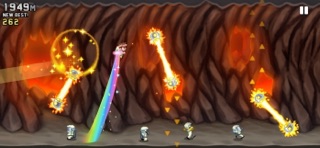
A zapper’s visible position lets you compare the gaps above and below it. Choose the wider useful route, reach that height and stop adding thrust once the line is clear. For a tall obstruction, a late climb can be worse than an early descent into the open side. Read the shape while it is still far enough away to make the adjustment smoothly.
A missile warning asks you to preserve room for the threat that follows. Avoid rushing from the floor all the way to the ceiling at the first signal; that can leave no remaining upward option. Establish a controlled position, track the incoming threat and complete the move around its actual path. After either hazard, look for the next opening rather than continuing the same climb or descent automatically.
Choose a Comfortable Flight Band
A comfortable flight band is a region with useful room above and below, rather than a single height you must hold throughout a run. In an open section, staying away from both extremes gives you choices when the next obstacle arrives. Move out of that band when the route requires it, then look for a way to recover room afterward.
Avoid constantly fighting to maintain an exact pixel height. Small rises and falls are part of the control rhythm. The more useful question is whether the current arc will meet an obstacle before you can adjust again. If so, make the correction early. If not, leave the input alone long enough to see the next section. Excess corrections can create a problem in a space that was already safe.
Missions: Give Each Run a Purpose
Missions turn an endless-run attempt into a more specific challenge. Read the mission’s stated task before starting: a coin target, a movement task and a distance objective can encourage different decisions. Concentrate on a task you understand rather than trying to satisfy every visible objective in a single chaotic attempt.
A mission is still part of the running game. If completing it would require a difficult detour while you are already struggling with the next hazard, a calmer attempt may be more useful. Practise the relevant action in an easier section and recognise what progress the game actually records. This makes a mission a way to learn the systems, instead of a reason to abandon the basic flight timing that keeps the run going.
Vehicles, Gadgets and New Movement Rules
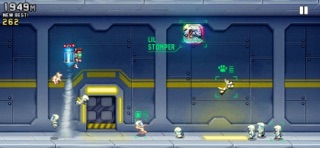
Jetpack Joyride gives Vehicle Pickups their own movement rules. Halfbrick names classic examples including the Bad As Hog, Crazy Freaking Teleporter, Gravity Suit, Lil’ Stomper, Mr. Cuddles and Profit Bird in its official vehicle explanation. A vehicle pickup changes the control challenge rather than simply placing a different picture over ordinary jetpack flight.
Read an upgrade by its effect. Halfbrick distinguishes magnetisation, which attracts coins during vehicle use, from gold plating, which changes appearance. Temporary power-ups create other opportunities: its official power-up information describes Cash Dash, Boost, Shield and Rocket Time with different benefits. Learn the movement in open space and watch how a temporary effect changes the next hazard decision. When the effect ends, return attention to Barry’s ordinary rise and descent before following a difficult coin line.
Handle Transitions without Rushing
A transition changes both the movement and the player’s expectations. Entering a vehicle can tempt you to keep the previous thrust rhythm, while losing one can leave Barry in a height or direction you did not intend. Watch the first open section after the change and establish a controlled line before aiming for optional rewards.
Use the same principle when a temporary effect ends. Notice where the normal character will reappear and what space will remain for the next adjustment. A safe vehicle section is not permission to stop looking at the lab. Keep one part of your attention on the route beyond the transformation, so that its end becomes a planned return to normal flight rather than the surprising moment that ends the run.
Collect Coins with an Exit Plan
A coin pattern is useful only when its route fits the next hazard. Before following an arc of coins, look at the height where it leaves Barry. If that exit points directly toward a zapper or removes space for a warning response, skip the final part of the pattern and return to a safer line.
Compare coins by the movement required to collect them. A short line near your existing path costs little attention; a high-to-low sweep can commit the entire next section. In a survival-focused attempt, take the easy coins and keep the flight predictable. In a coin-focused mission, choose a manageable pattern early rather than chasing every missed coin afterward. These decisions make coin collection part of a controlled run instead of a distraction from it.
Advanced Tips: Compare Runs Fairly
Use similar starting conditions when comparing attempts. A run with an unfamiliar vehicle, a new objective and a different set of equipment does not test the same skill as a simple distance attempt. Begin with one stable activity and compare the point where your control first becomes uncertain.
After a crash, distinguish a late hazard decision from an overshoot. If the route was recognised too late, look farther ahead on the next run. If Barry rose too far despite recognising the gap, shorten the thrust. If a coin detour caused the problem, repeat the section without collecting that line. Each correction addresses a visible event. This is more useful than making every subsequent run more frantic in the hope that faster input will eventually solve it.
A Useful Goal for Your Next Attempt
Give the next attempt one movement goal. For example, make three controlled rises without touching the top of the screen, or pass the first familiar zapper while already identifying the following gap. Choose a goal tied to the flight rather than an arbitrary promise to reach a much larger score.
Once that movement is reliable, add another decision such as a modest coin line or one mission action. Keep the original flight goal in place so that you can tell whether the new task disrupted it. This layered approach makes Jetpack Joyride practice concrete. You are adding a challenge to a movement you can already perform, rather than asking one attempt to teach every obstacle, reward and vehicle at once.
Build a Personal Hazard Checklist
Build a short checklist from hazards that have actually ended your recent runs. For a zapper, note which side offered a clear gap. For a missile section, note whether your first reaction left enough room for the eventual pass. For a vehicle transition, note whether you resumed ordinary movement early enough to read the following obstacle.
Keep the checklist short enough to use while playing. Three recurring mistakes are easier to remember than a long catalogue of every possible laboratory event. When one becomes reliable, replace it with the next problem you encounter. This makes the checklist a record of your own Jetpack Joyride decisions, not a collection of tricks detached from the movement and hazards that are currently costing you progress.
Similar Games to Explore
Jetpack Joyride combines thrust control, scrolling hazards and optional reward routes. Those mechanics are useful points to look for when exploring more flight games. A new course can give you another way to practise a short rise, a controlled descent or deciding when a reward is not worth an unsafe detour.
The related-game collection below provides more jetpack and flying activities. Begin a new title by learning how its character rises and falls before attempting a long obstacle sequence. Keep the movement skill you are working on specific: less overshoot, a clearer approach to a gap or a smoother transition into the next action. Trying a different rhythm can make those decisions easier to recognise when returning to the laboratory.
Browser games in this collection
- Jetman Joyride — A jetpack flight-survival game set among rocky obstacles and airborne debris, credited by the distributor to FG Studio.
- Crazy Jetpack — A jetpack obstacle flight with missiles, rotating lasers, spike hazards and coins used for upgrades.
- Rocky the Jetpack Boy — A side-scrolling jetpack action runner credited as a Construct 2 build in its distributor description.
- Jetpack Kiwi Lite — A side-scrolling flying shooter with a source-described four-level structure, character specials and local co-op.
- Flying Orange — A platform adventure using a fuel-limited jetpack to instructions an orange through traps and enemies.
- Labubu Jetpack Rush — A lab-escape runner whose jetpack lifts the character while held, with distance rewards and upgrades described by the source.
History and Updates
Halfbrick created Jetpack Joyride around Barry Steakfries, the laboratory escape and its bullet-powered jetpack. Vehicles, costumes, missions and equipment add variety around the original endless-running loop. The official Jetpack Joyride Android listing identifies the native game’s supported features, download and optional purchase information.
Use official product and support information when checking a current equipment effect or account feature. For practical play, compare what changed in the movement rather than expecting a particular score from an upgrade alone. A new vehicle can be enjoyable while still asking you to relearn how its next action fits the lab. The lasting skill is reading the next obstacle early, applying only the thrust needed and leaving a usable route after each successful pass.
Keep the Next Run Simple
Begin a Jetpack Joyride run with a flight line you can read. Use short thrust inputs, leave room above and below where possible and aim for the next clear gap rather than the brightest coin trail. Let a successful pass set up the following one.
Keep the next attempt simple in a specific way. Learn a recurring zapper arrangement, reduce one habitual overshoot or make a cleaner return from a vehicle. Each run becomes more useful when it tests a visible movement decision. Collect the rewards that fit that plan and leave the ones that would undo it. A more controlled route through the laboratory is a real improvement before a new distance record appears, because it gives you a dependable way to reach the next challenge.
Frequently asked questions
Who created Jetpack Joyride?
Halfbrick created Jetpack Joyride, starring Barry Steakfries on a laboratory escape with a bullet-powered jetpack.
How do the original Jetpack Joyride controls work?
Hold the touch input to apply thrust and rise. Release it to descend. Practise short adjustments so the flight arc fits the next gap.
Does Jetpack Joyride have a finish line?
Its central format is endless running through the laboratory. Missions can give individual attempts separate objectives.
Should I collect every coin pattern?
No. Check where a coin pattern leaves Barry. Skip it when following the full route would remove the space needed for the next hazard.
Why does a vehicle feel different from normal flight?
Vehicles have their own control responses. Establish the movement in open space and plan the return to ordinary jetpack flight when the vehicle ends.
Which classic vehicles appear in Jetpack Joyride?
Halfbrick lists the Bad As Hog, Crazy Freaking Teleporter, Gravity Suit, Lil’ Stomper, Mr. Cuddles and Profit Bird among the classic vehicle pickups.
Is the original Jetpack Joyride free to install?
Its standard mobile listings offer free installation with optional purchases and advertising. Check the official listing for the current device offer.
How can I improve my Jetpack Joyride distance?
Read farther ahead, use smaller thrust adjustments and leave optional coins when they disrupt a safe line. Practise one recurring hazard or vehicle transition at a time.


Good game? Tell us.0
Share a tip, celebrate a high score, or tell us what you think. Keep it friendly.